2026
False positives

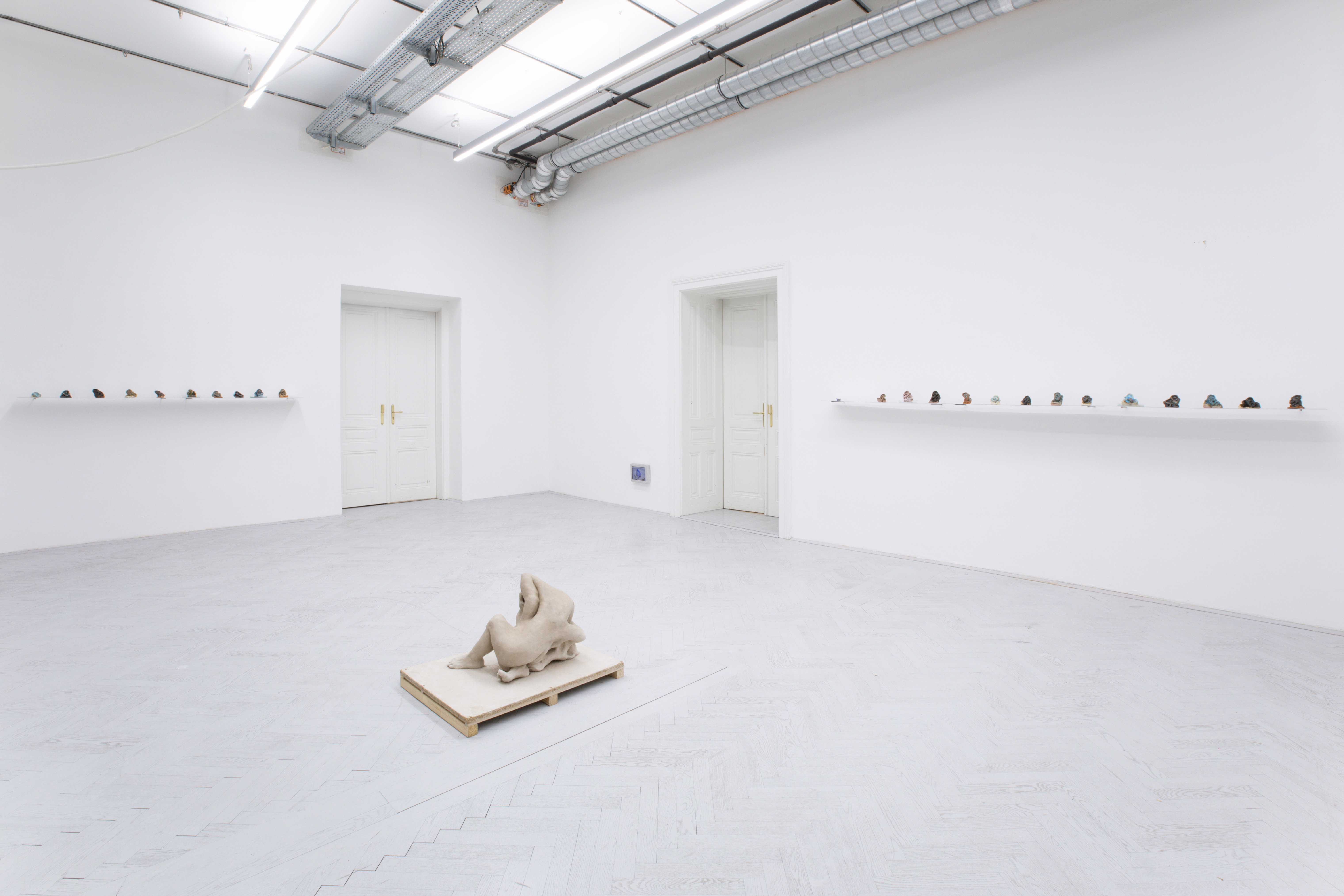
Title False positive 270826
Year 2026
Medium Computer vision pipeline, misrecognised object (chair), coated metal, plaster
Size 77 x 64 x 45 cm
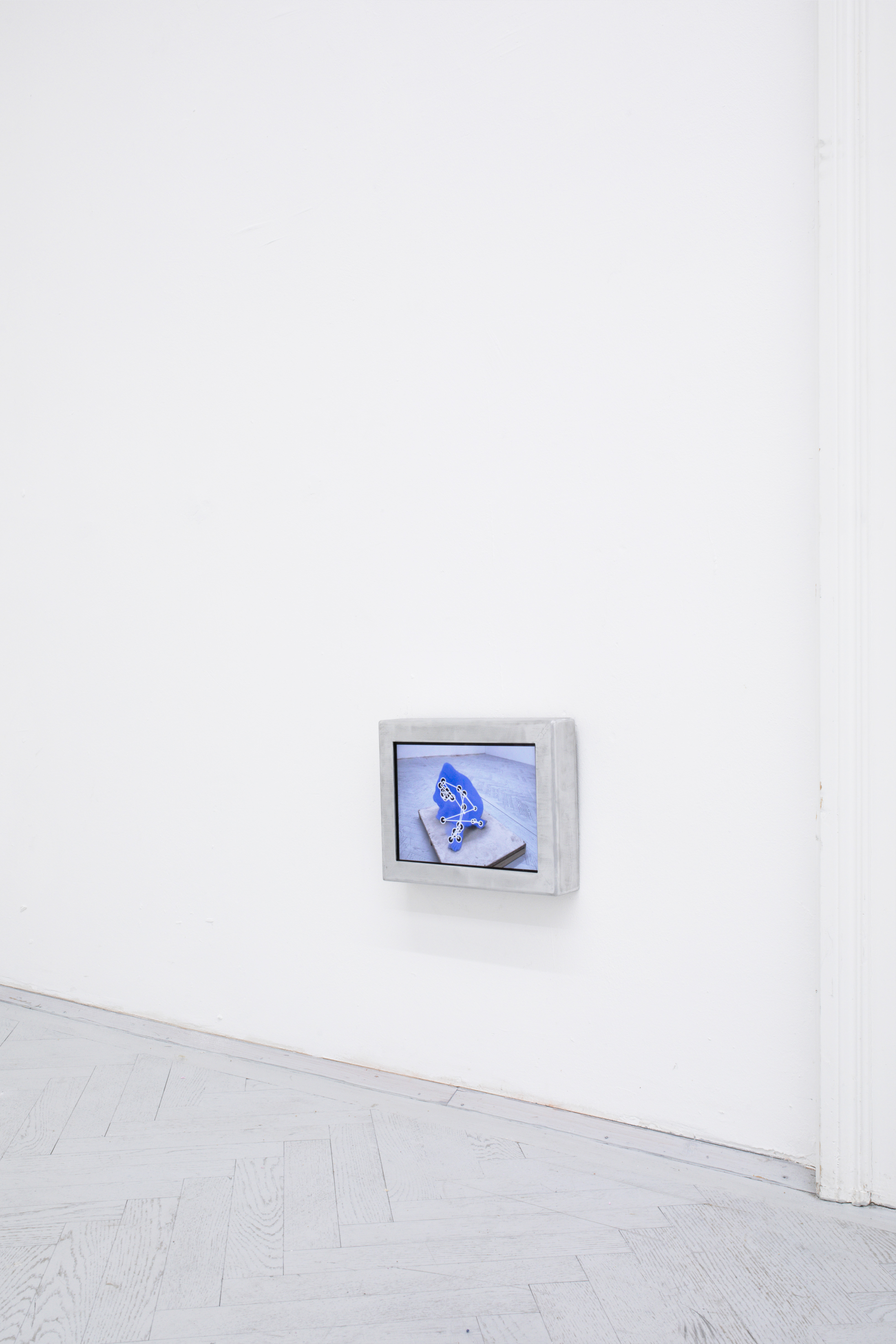
Title Forage
Year 2026
Medium Computer vision pipeline,misrecognised object (chair),screen recording, aluminium,iPad
Size 29 x 11 x 5 cm
Duration 0’08”, loop


A shoulder emerges from a doorway. A body assembles itself from the contours of a chair.
Kind brings computer vision into her field of vision, introducing another way of seeing alongside human perception. A car wheel, a stroller left at the curb or a discarded chair can accidentally be recognised as a set of shoulders, elbows, hips and knees. What would normally be treated as a “false positive”, Kind instead takes as a proposition.
From the street into the studio, Kind takes the detected joints, limbs and coordinates as instructions for shaping the body read in the found object. Computational readings like these are all around us, produced by cameras in phones, cars, doorbells and other devices. A detection can become more than a description: it can set something in motion. Here, an otherwise invisible computational process acquires material consequence.
False Positives asks what happens once a reading becomes a condition of lived reality.

2025
Human Enough

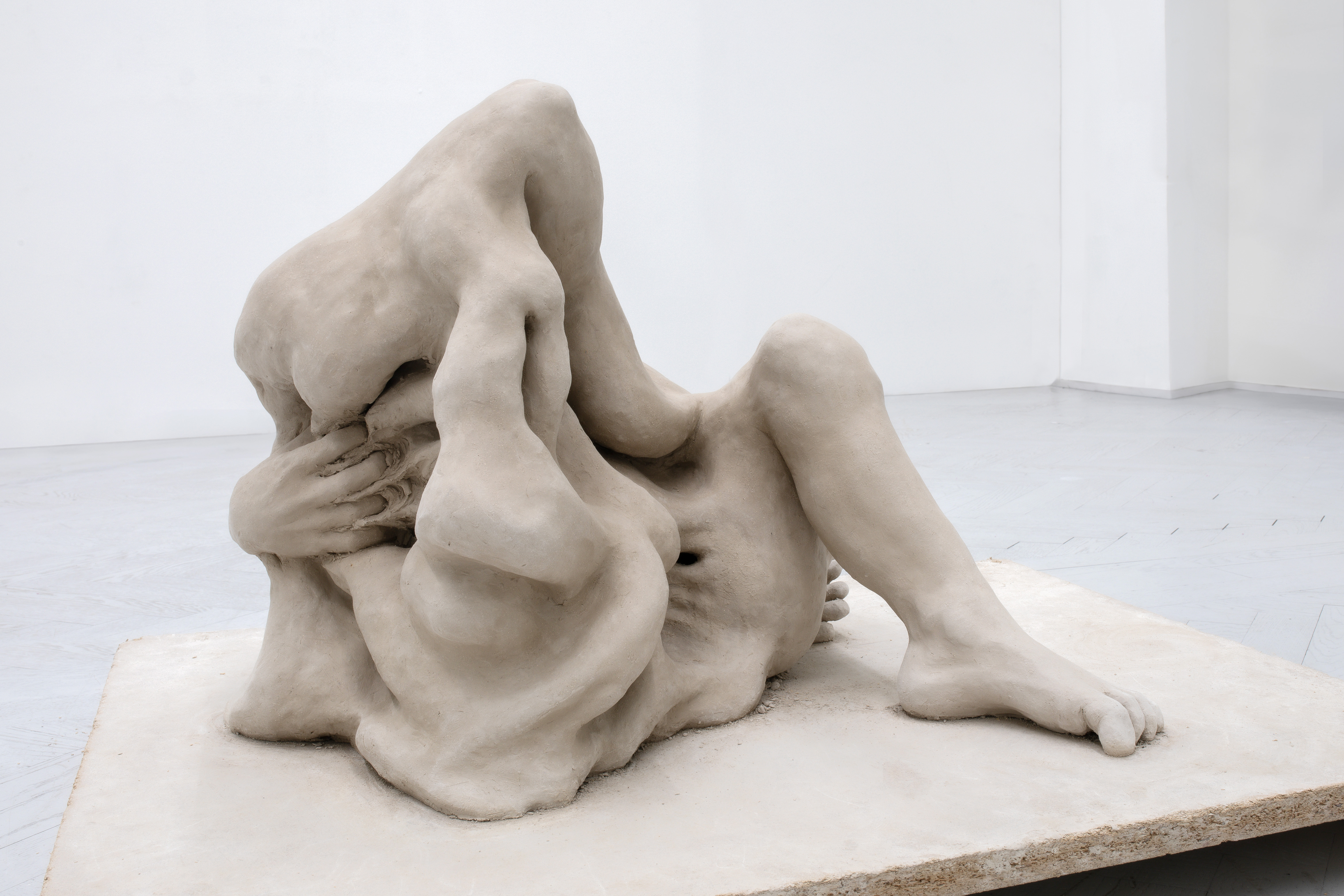
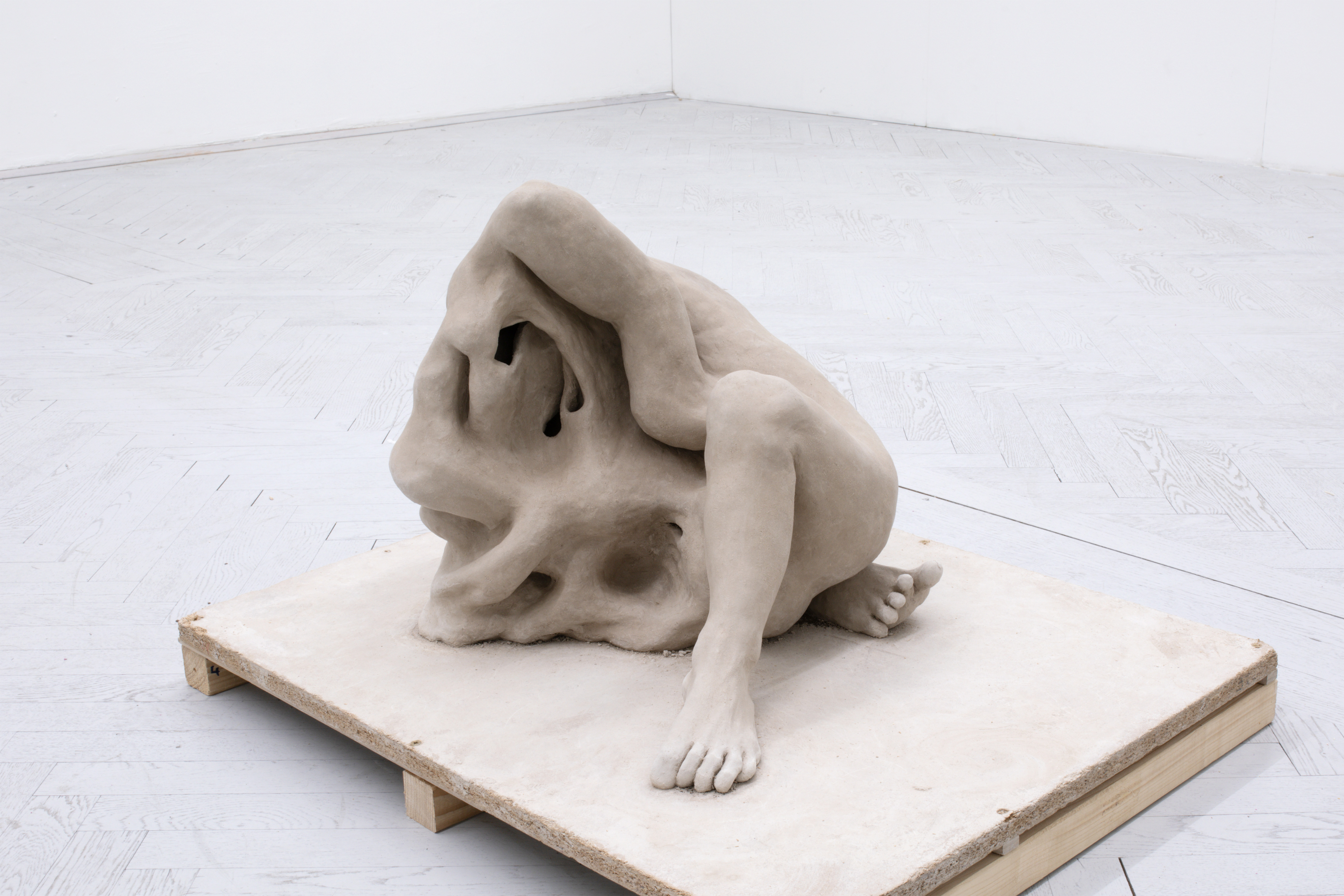
Title Crouching (0.44), Covering torso(0.52), Sad(0.23), Nudity likelihood (0.61)
Year 2026
Medium Clay, Camera, Pose estimation algorithm, classification pipeline, projector
Size 80 x 65 x 40 cm


What counts as human enough? People have long been reduced to their bodies to be read. Throughout history, the human body has been measured, compared and interpreted. Its proportions, posture and surface have been used to assign intelligence, morality and social worth. Today these measurements are no longer taken by anatomists or physiognomists, but encoded into computer vision through hidden, post-anatomical codes.
In response, Kind hands part of her artistic agency to computer vision in the studio. Working under continuous camera observation, Kind shapes wet clay by hand in dialogue with algorithmic feedback. This dialogue between hand and computer continues, until the system persistently detects a human body; a ‘false positive’. At that point of recognition, the form is declared finished, materializing the threshold where the sculpture is ‘human enough’ to the machine, ready for classification: Crouching(0.44), Covering torso(0.52), Sad(0.23), Nudity likelihood(0.61).
The question of what counts as human has been used to justify social hierarchy and dehumanisation, underwriting slavery and eugenic policies. Such codes were actively carried and legitimised through art. People have long shaped themselves toward the standards these systems set. In the studio, Kind undergoes a similar process, adapting her work to the logic of computer vision. The false positives make undeniable what is true of every human detection; that the system has no aperture beyond the categories its measurements confirm.
The resulting figure is crouched low, folded inward and faceless. Its surface comes to life under the machine’s gaze; skeletal diagrams of lines and joints measure the body beneath. Some align perfectly; others drift or disappear. The body returns to mute materiality when that gaze withdraws, reopening it to human interpretation.

2025
Test Tiles

Title Test tiles
Year 2025-ongoing
Material Clay, Silica, copper carbonate, sodaash, kaolin, copper sulfate, racomitrium microcarpon, borax, slime mould
Size 17 x 17 x 9 cm
Title Diagnosis
Year 2025
Material Sound, Computer vision pipeline(classification afterLomax, Physiognomy, 1884,measurement after Bertillon,La photographie judiciaire,1890), text-to-speech, boneconduction speaker, aluminium,Test Tiles, camera
Duration 8’31”


Traditionally, test tiles are part of the artistic act of measuring, comparing, and selecting, that usually remains invisible. They are tools of judgment in the studio, determining what material is deemed worthy of the final piece. Kind replaces these tiles with ears, applying the logic of measuring and selecting clay and glaze to the anatomy of the human body.
Ears carry a long scientific history of being read to define a persons’ character, intelligence and moral worth. Till today, ears remain an identifyer in biometric surveillance systems now automated. Kind stages this continuity by matching the test tiles-as-ears with an 18th-century physiognomy manual read aloud by a child’s voice; a pseudoscience that claimed to define meaning from an ear’s size, countour, folds, helix, lobe, antitragus, angle and color.
Read together, the tiles and the recitation expose how easily subjective judgment is dressed up as procedure, conditions that allow such logics to become instruments for political and ideological control.
2025
Subject Under Observation
Sculpture
Title ‘Crouching (0.44), Covering torso(0.52) Sad(0.23), Nudity likelihood (0.61)
Year 2025
Material Clay, camera, pose estimation pipeline
Size 80 x 65 x 40 cm
Collaborator
Title Collaborator
Year 2025
Material Live camera, computer vision pipeline, iPad, aluminium
Size 29 x 11 x 5 cm
Title ‘Crouching (0.44), Covering torso(0.52) Sad(0.23), Nudity likelihood (0.61)
Year 2025
Material Clay, camera, pose estimation pipeline
Size 80 x 65 x 40 cm
Collaborator
Title Collaborator
Year 2025
Material Live camera, computer vision pipeline, iPad, aluminium
Size 29 x 11 x 5 cm
While the artist’s studio is often imagined as a private, self-contained space of creative freedom, Kind’s studio setup functions as an environment of continuous negotiation with historical and contemporary systems of control.
Today, artworks increasingly exist within systems of machine vision. Before reaching a human audience, they are photographed, moderated, indexed, recommended, incorporated into training datasets and analysed by algorithms. Artistic production no longer unfolds solely in relation to human viewers, but also within computational regimes that influence how artworks are circulated, interpreted and valued.
Kind situates these contemporary technologies within a long history of visual regimes. From natural preditor-prey relationships and physiognomy to agorithmic platforms and computer vision. In this context, Kind deliberately hands part of her agency to external guidance; observing, responding and influencing the work as it unfolds. She temporarily submits to their logic, allowing their assumptions, contradictions and failures to become materially visible. Human agency and computational perception continuously negotiate the form an artwork ultimately takes.
2024
Lifetime Approval Rate 96%

Title Lifetime Approval Rate 96%
Year 2024
Material Video, Behind-the-scenes documentation of the artist performing a data annotation task, with simultaneous heartbeat monitoring, LAION-5B Training Database
Specs HD, 1920 × 1080
Sound MYNGRY
Duration 7’25”
Title Hand 71
Year 2024
Material Silicone
Size 20 x 18 x 8 cm
Title Hand 45
Year 2024
Material Silicone
Size 9 x 36 x 11,5 cm
Title Hand 21
Year 2023
Material Silicone, Mechanics and electronics
Size 23 x 18 x 8 cm
Title Hand 14
Year 2023
Material Silicone
Size 17,5 x 9 x 10 cm
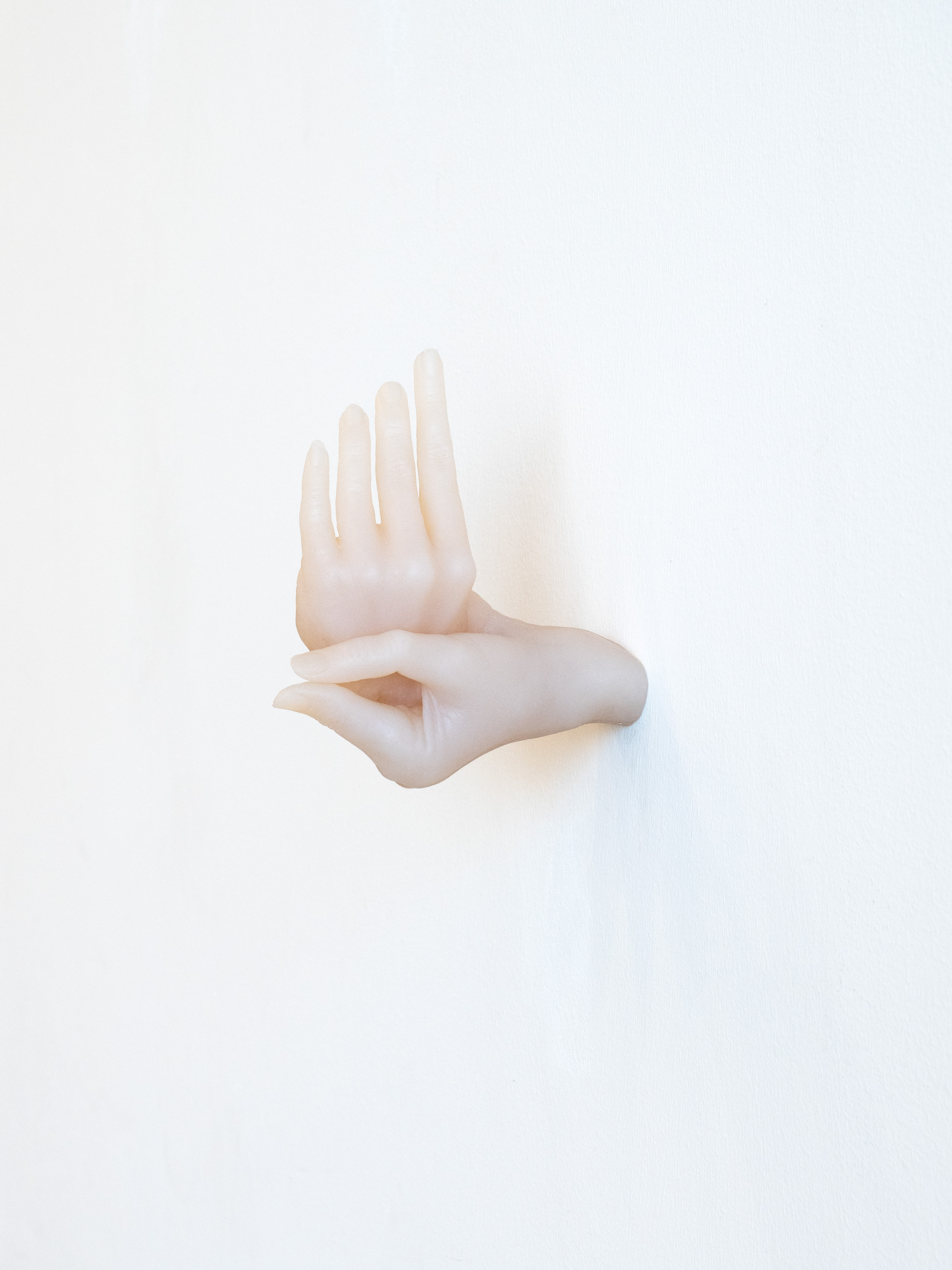
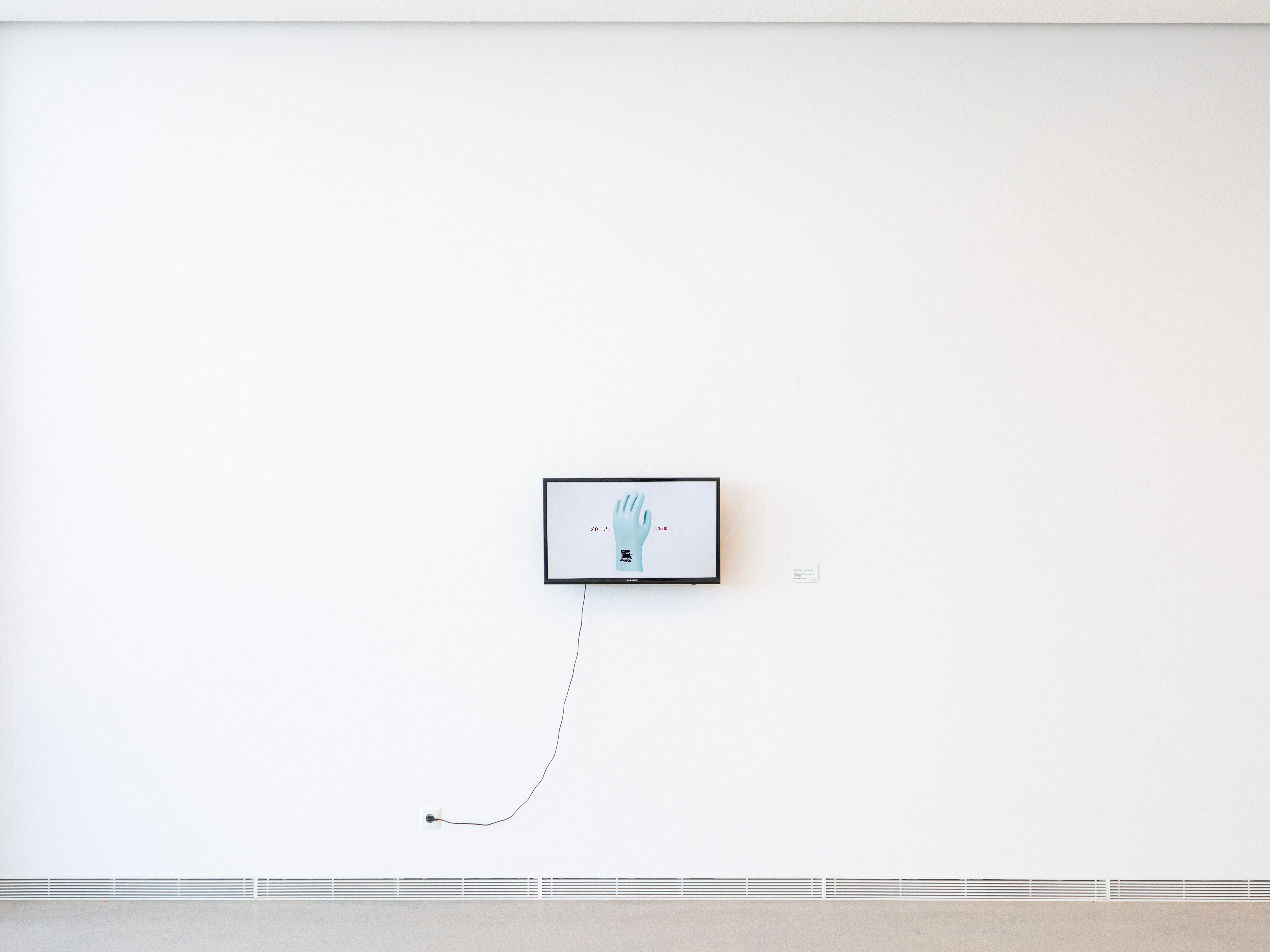


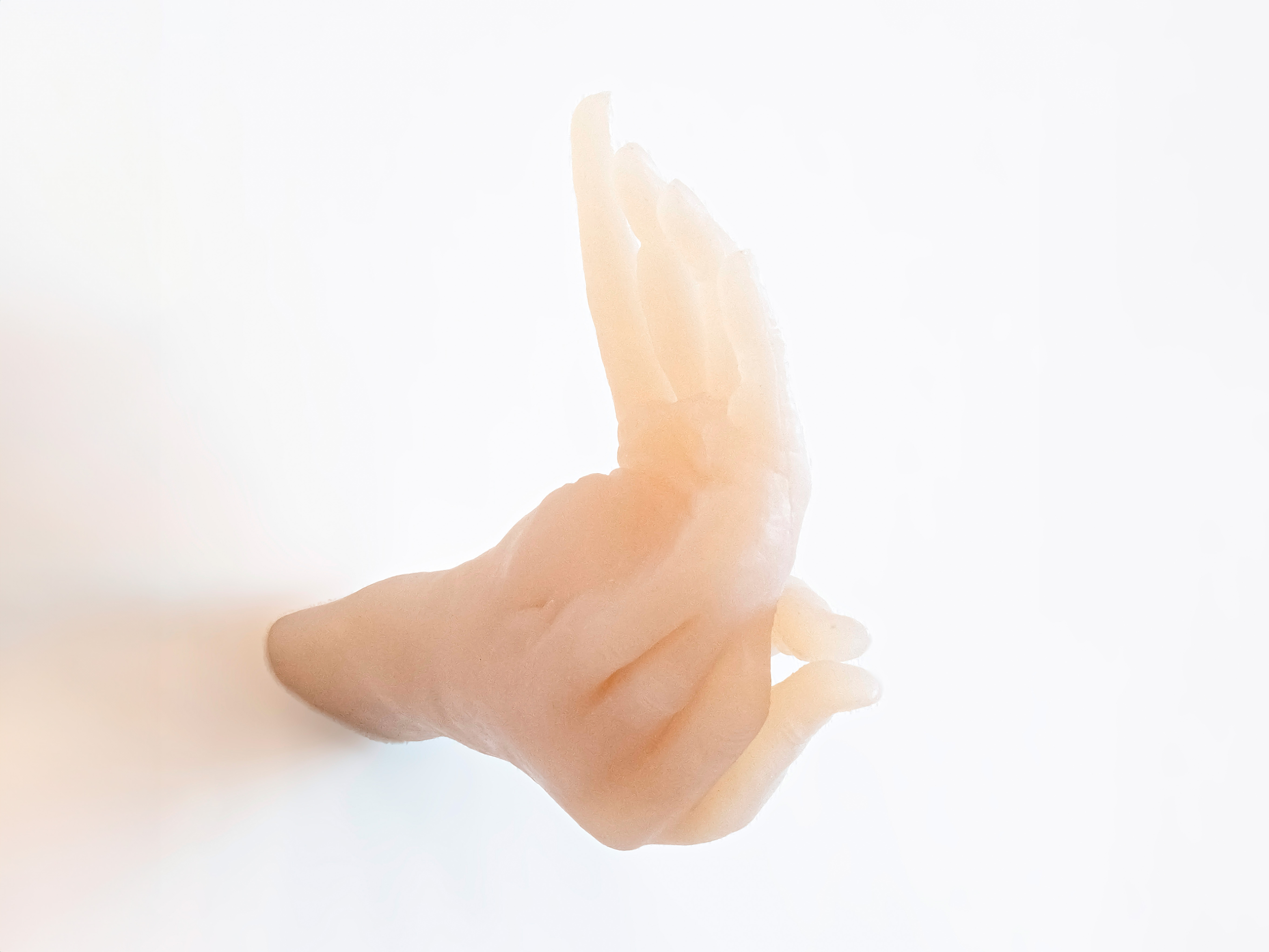
Perched atop the mountain’s summit, where humanity has long sought to touch the divine, the exhibition dismantles the myth of Artificial Intelligence as an autonomous force.
Artificial intelligence is often imagined as autonomous, immaterial and self-sufficient. Yet behind every AI model lies a hidden and unacknowledged infrastructure of human labour: annotating images, evaluating outputs and training the datasets through which AIs learn to understand our world. Ilse Kind's work emerges from her own experience as an annotation worker; under unpredictable, repetitive and underpaid circumstances. This work makes those hidden bodies tangible, exposing the rhythms, repetitions and physical demands embedded within the production of machine intelligence.
At the center of the exhibition, the video Lifetime Approval Rate 96% presents a full-length Human Intelligence Task. Its title refers to the score that evaluates workers’ performance. Precisely instructed, closely monitored and bound by confidentiality, Kind captured what was allowed: the clicks of her hand on the trackpad and the rhythm of her heartbeat as she worked. These sound recordings were made into a soundscape by MYNRGY, amplifying the bodily rhythms of digital labor that usually remain unheard.
On screen, repetitive trackpad clicks annotate training data. The original data is substituted with a leaked training database, used to train AI models in generating images of hands. Medical photographs collide with artist drawings, miniature army figures, and cowboy toys. Fed with this material, AI falters most visibly in its attempts to recreate the human hand; producing distorted, anatomically flawed gestures.
The AI-generated output of the same model trained on this database take sculptural form in Hand 14, Hand 21, Hand 45, and Hand 71. Modeled with Kind’s own annotating hands and assembled through the logic of diffusion algorithms, the works collapse boundaries between human and machine, digital process and physical form. Failures that signal to AI’s lifeline of human judgment, selection, and correction.
[Accompanying essay ’Handwerker; a human resource farm’ on request ︎]
Teaser